The Migration Archieve
This architectural project sets out to give Convoys Wharf a new role in the city, turning it into a place where social justice, community life, and historical reflection visibly come together. At its core is the idea of a “Migration Archive” that is not isolated as a museum piece, but woven into workspaces, workshops, and shared areas, so that remembering and making are always connected. By bringing research, craft, and collaboration into one spatial framework, the project tries to shape a future that is socially aware and imaginative, while still taking the site’s layered history seriously.
The Migration Archive is imagined as both a monument and a living platform. It gathers interactive installations, recorded voices, and carefully curated documents into an environment that invites people to wander, listen, read, and talk to one another. Instead of presenting migration as a distant story, it makes its impact on Convoys Wharf and the surrounding communities tangible, asking visitors to think about how movement, displacement, and belonging have shaped this place—and still do. Spaces shift from quiet corners for individual reflection to larger rooms for collective discussion, so people can move between absorbing stories and actively responding to them.
Around and alongside the archive, the project introduces contemporary offices, workshops, and collaboration spaces that extend this social and educational role into everyday routines. These spaces are laid out to encourage chance encounters, shared use, and cooperation between activists, researchers, local residents, and students. By providing rooms for meetings, making, and learning, the design gives concrete support to community initiatives, campaigns, and educational programs, turning Convoys Wharf into a working infrastructure for activism and collective problem-solving rather than just a symbolic gesture.
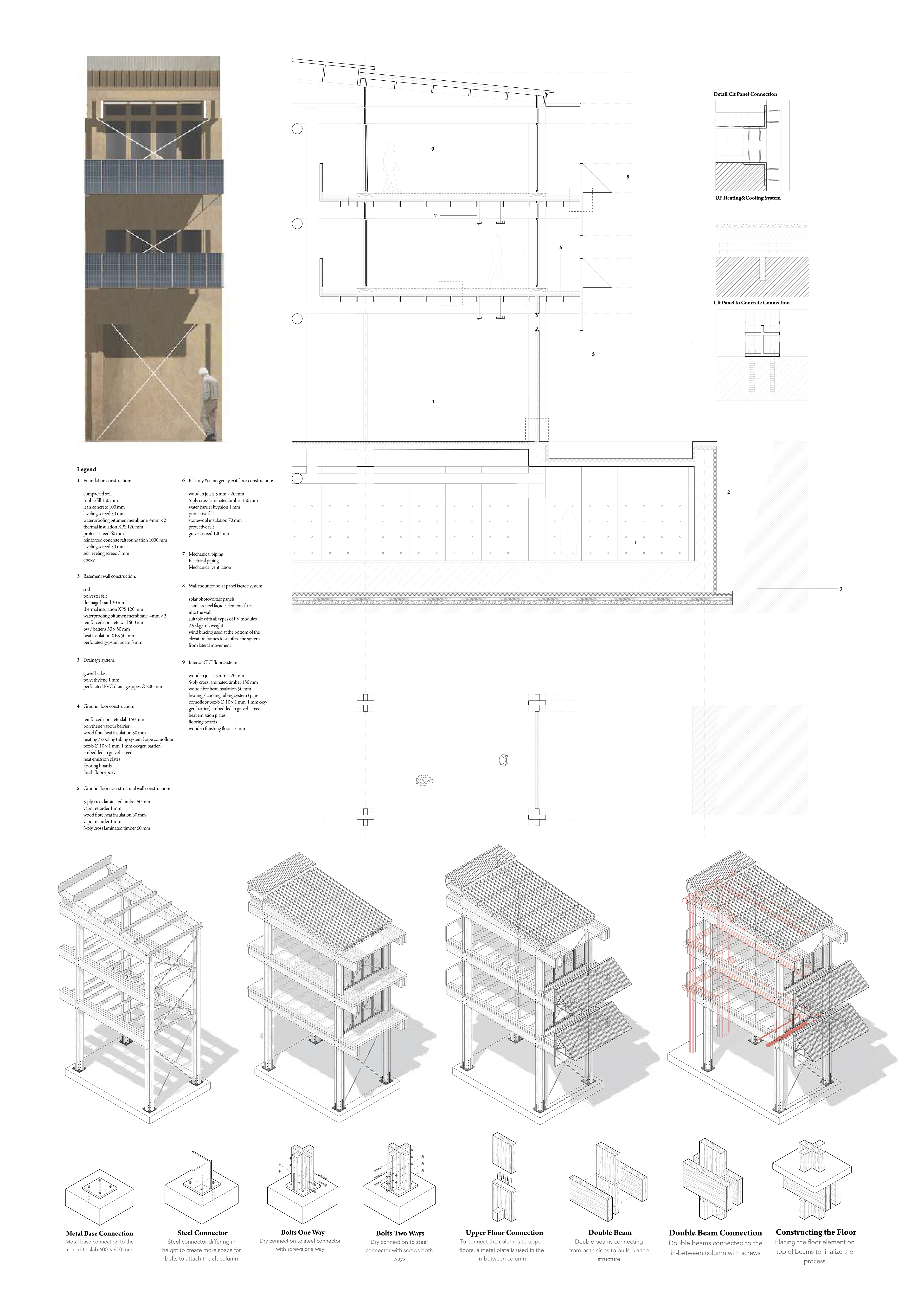
At the same time, the project is very much about the physical character of the site. It reconnects Convoys Wharf to London’s industrial and maritime past by carefully working with the existing buildings and waterfront, instead of erasing them. New cuts and openings create a symbolic harbor that recalls the site’s long relationship with shipping and global exchange. The form of the Migration Archive borrows the robust clarity of old warehouses, but softens and adapts them to welcome public use. The choice of Cross-Laminated Timber as a primary material ties contemporary construction to the city’s timber heritage and signals a commitment to more sustainable building. Taken together, these decisions aim to make Convoys Wharf a place where history and future, memory and everyday life, can coexist in a clear but generous architectural ensemble.
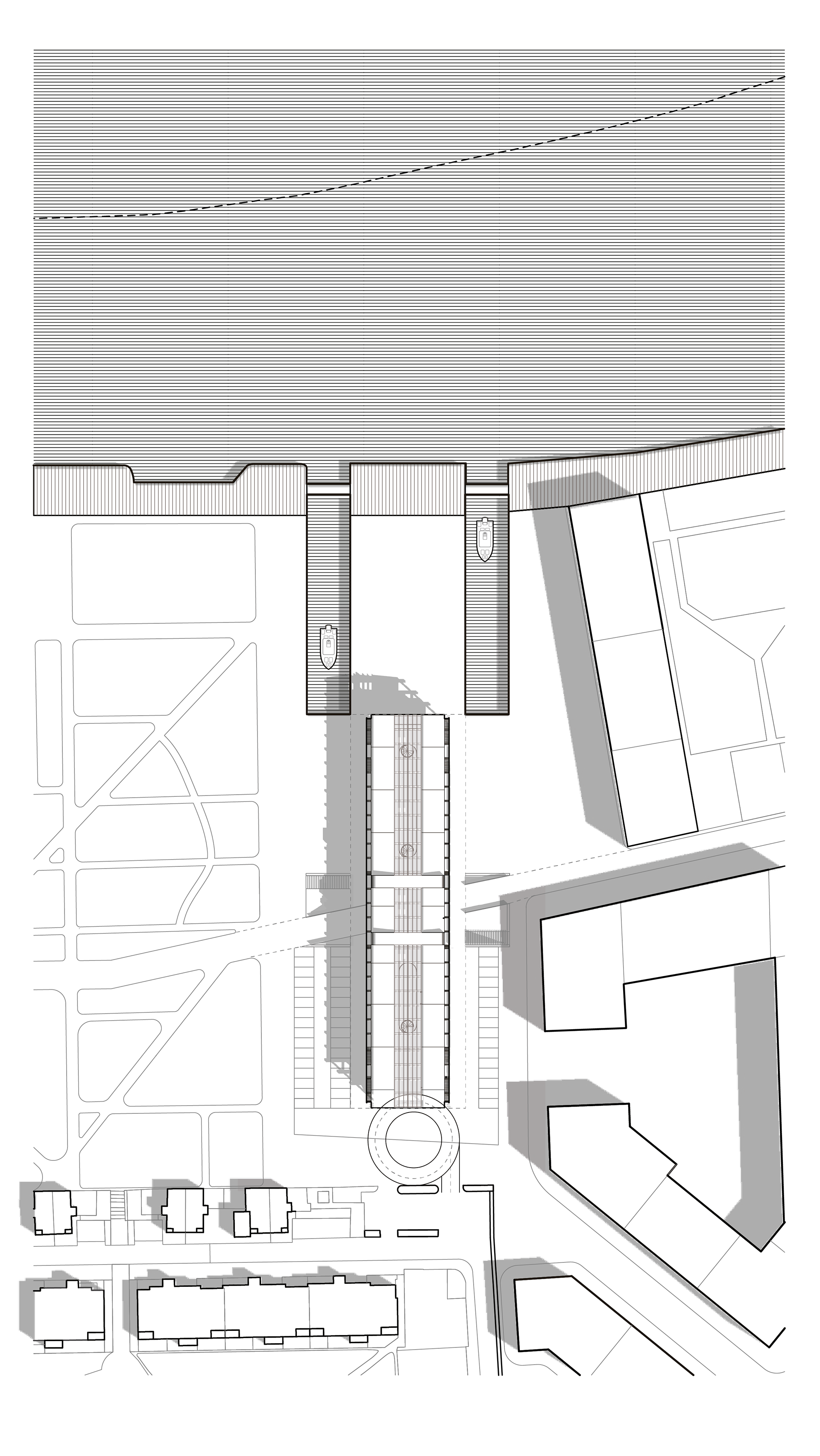
Image (Above): Migration Archieve in the site context
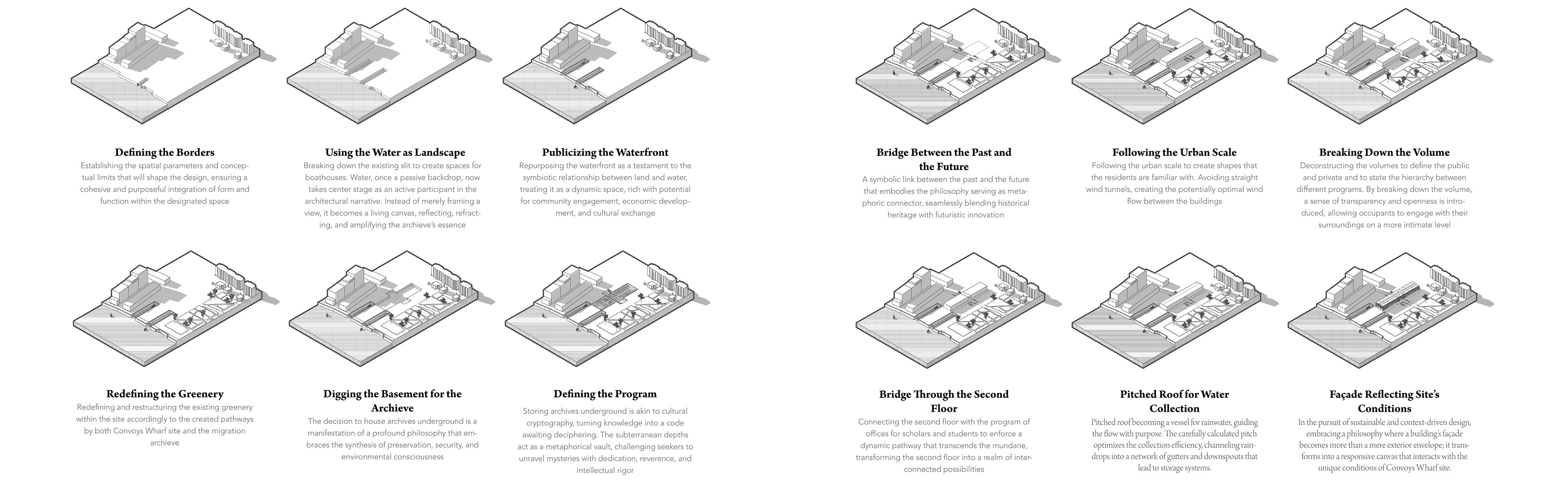
Images (Above): Site diagrams demonstrating step by step the urban planning strategies and site sitting of the archieve
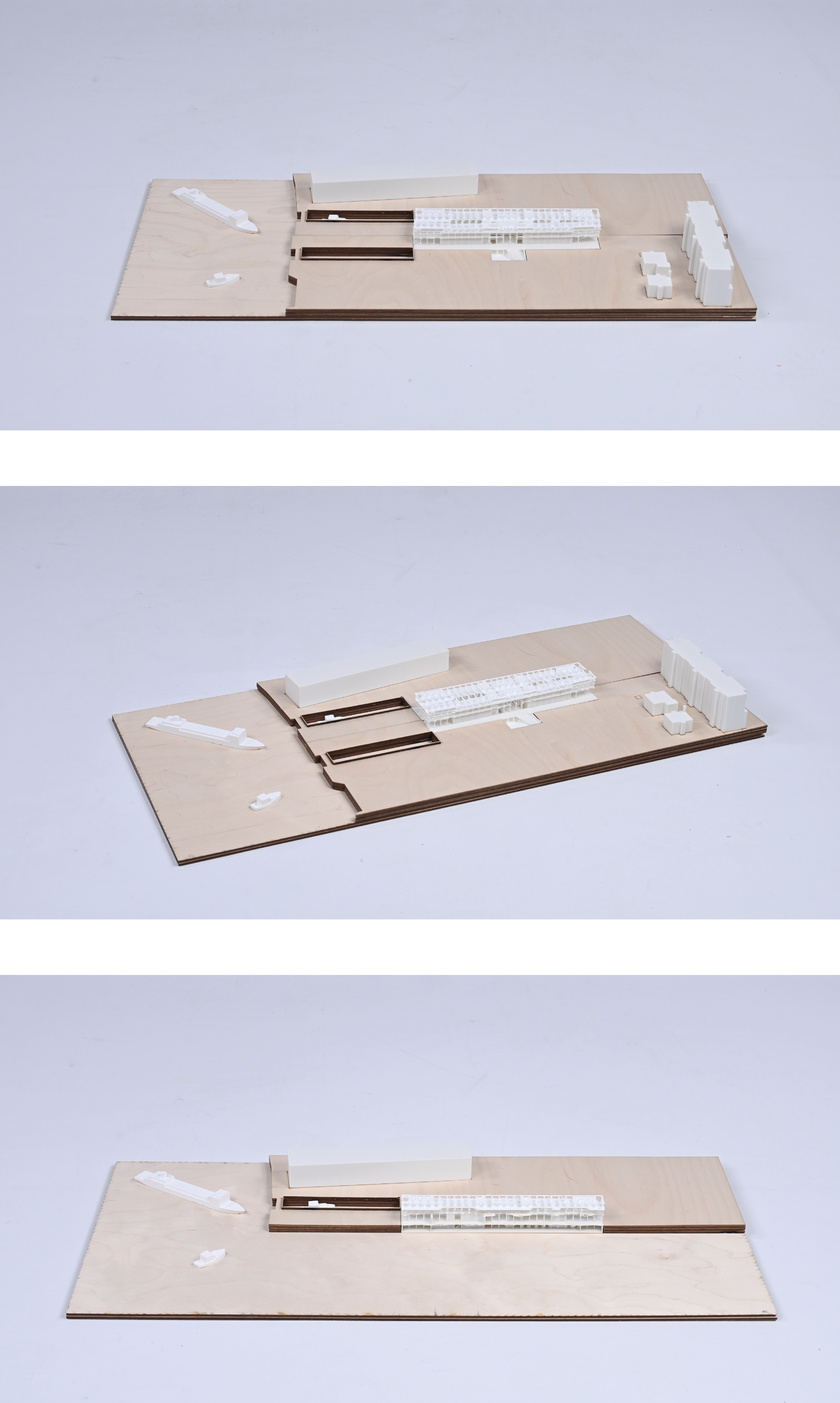
Image (Above): 1/500 model pictures
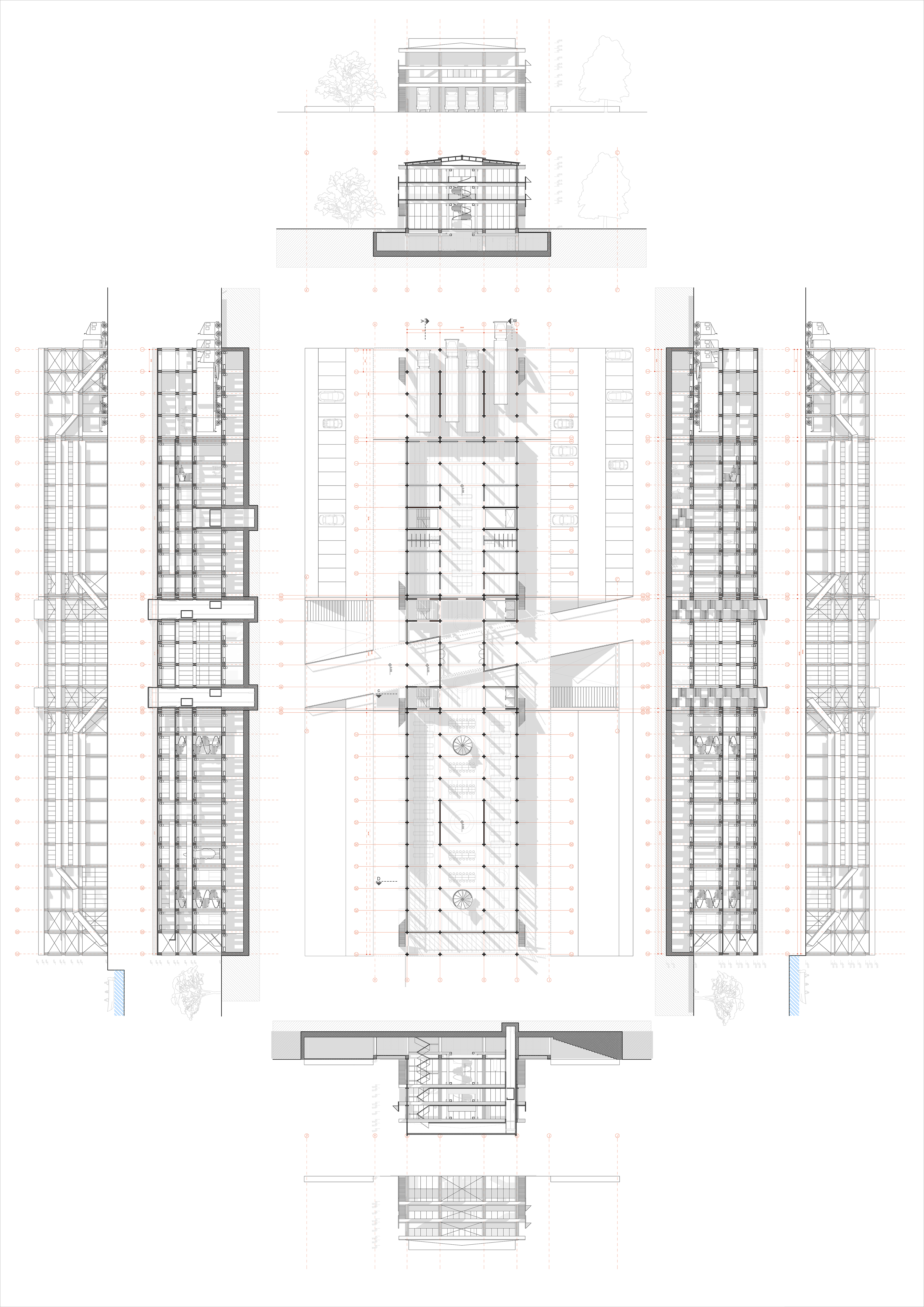
Images (Above): The ground floor plan with four sections and elevations
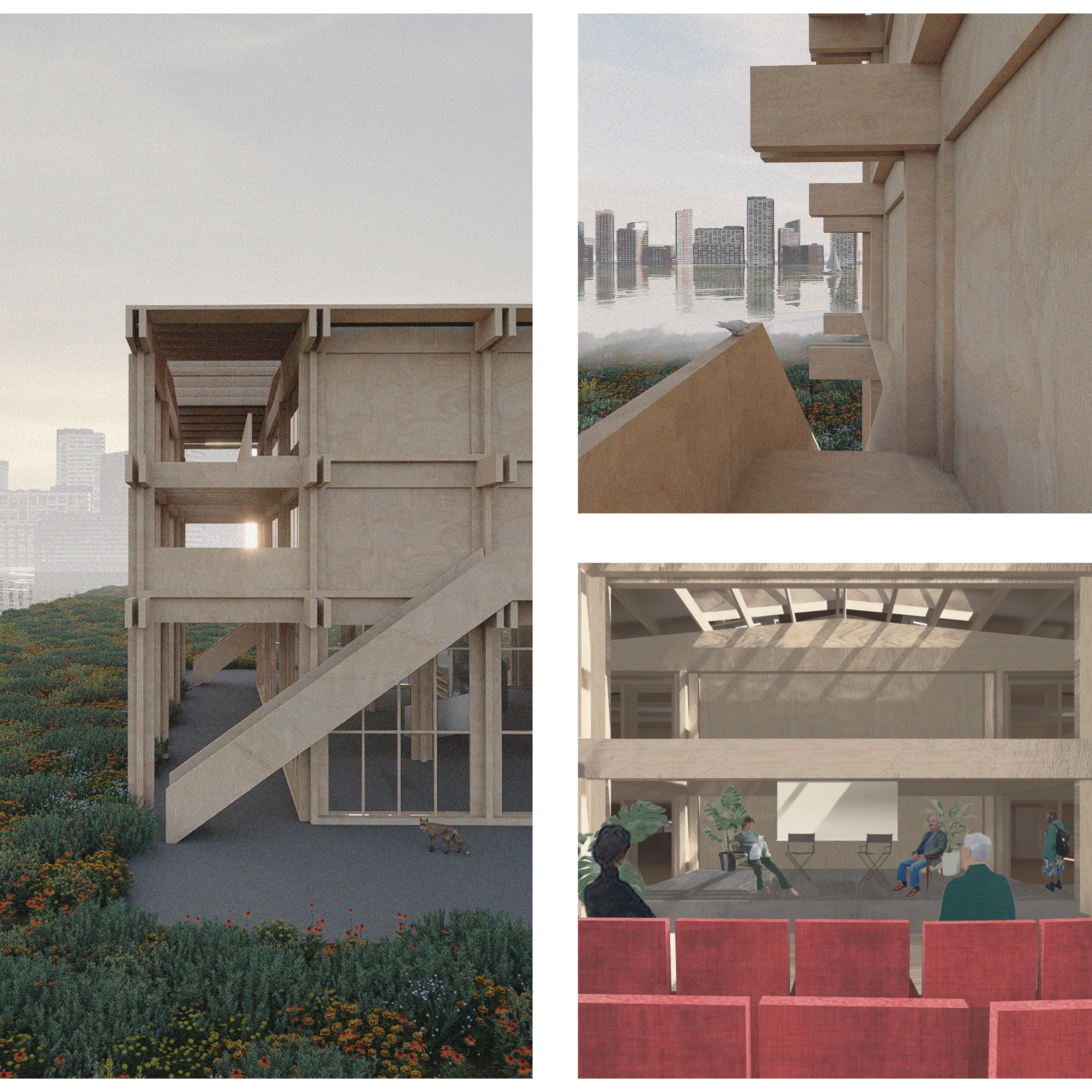
Image (Above): The interior and exterior experience of the archieve