The Women House
The Women House stands as a carefully calibrated architectural organism—one that operates at the intersection of spatial tradition, social reform, and cultural negotiation. Rooted in the customs of rural Senegal yet deliberately oriented toward progressive change, it transforms architecture into an active agent of empowerment rather than a passive container of activity. It does this not by rejecting the everyday language of the village, but by reworking it from within, so that familiar forms begin to carry new social possibilities. In this way, the project positions itself as both recognizably “of” Baghere and quietly insurgent against some of its inherited gender hierarchies.
At its core, the Women House reinterprets the spatial archetypes that define domestic and communal life in Baghere Village. The choice to work with the familiar rectilinear form is not aesthetic simplification but a strategic architectural gesture that takes local building intelligence seriously. By embracing a typology that every inhabitant instinctively recognizes, the building situates itself within the collective memory of the village and reduces the psychological distance between “new” and “known.” Its volumes, proportions, and materiality echo the vernacular dwellings around it—thick walls, shaded edges, a clear relationship to the courtyard—enabling the structure to merge seamlessly with its surroundings while subtly shifting their meaning. The project thus uses continuity of form as a vehicle for discontinuity of use and agency.
Within this familiar perimeter, however, the Women House reorganizes space in a way that challenges entrenched social patterns rather than reproducing them. Instead of reinforcing the traditional inward-facing domestic layout—long used to confine women to the private sphere and to render their labour invisible—the project opens itself outward, both physically and symbolically. Courtyards, transitional thresholds, and shaded communal zones are carefully choreographed to create a spatial network that invites gathering, movement, and participation throughout the day. Spaces are not rigidly assigned to single functions but designed to accommodate meetings, workshops, childcare, and informal conversations, allowing women to occupy the building on their own terms. Architecture becomes a medium through which restrictive boundaries are dissolved, offering women the possibility to reclaim public visibility and forge new relationships within the community, and turning the everyday act of crossing a threshold into a subtle gesture of emancipation.
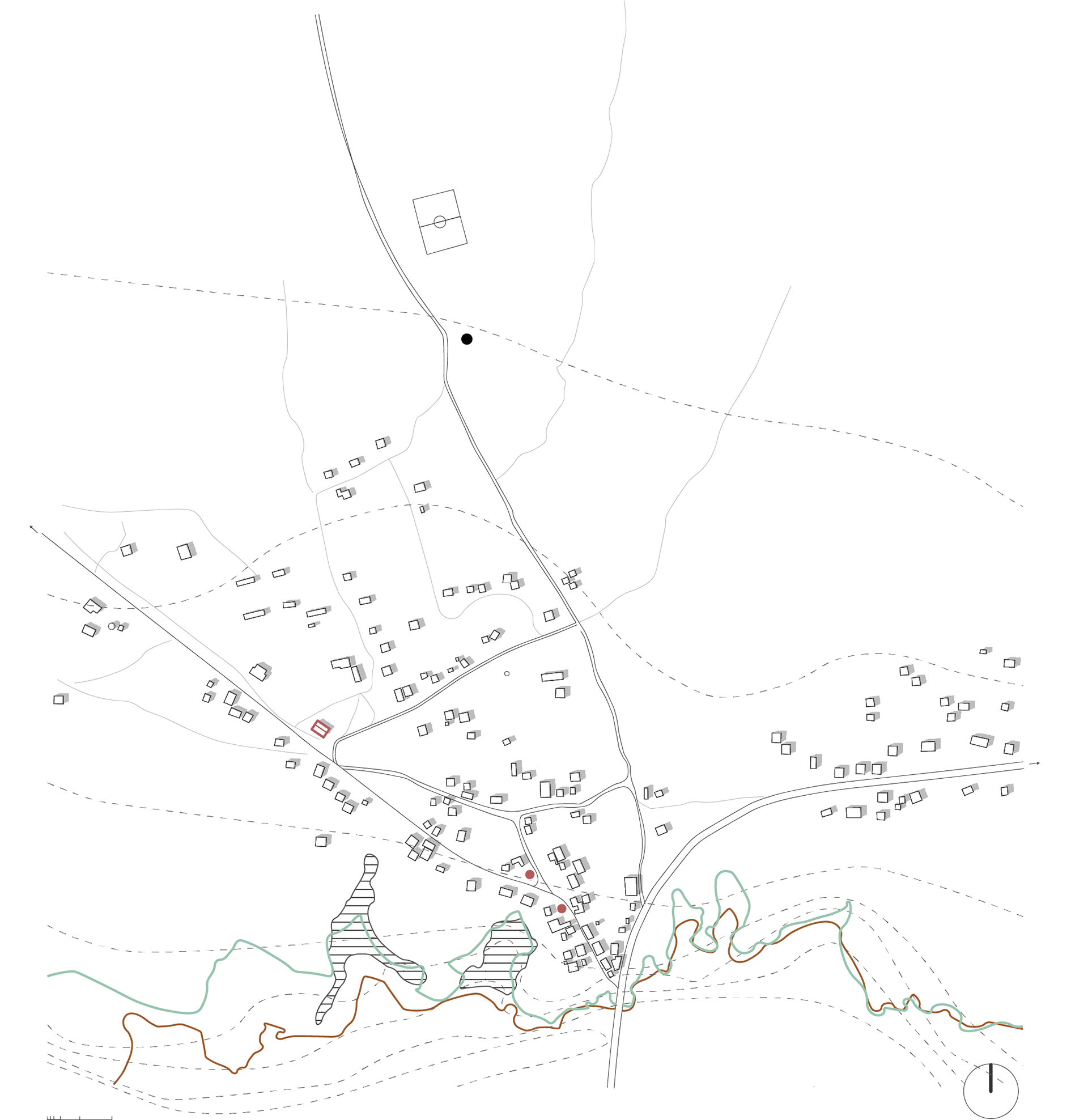
Image(Above): Site plan with the women house
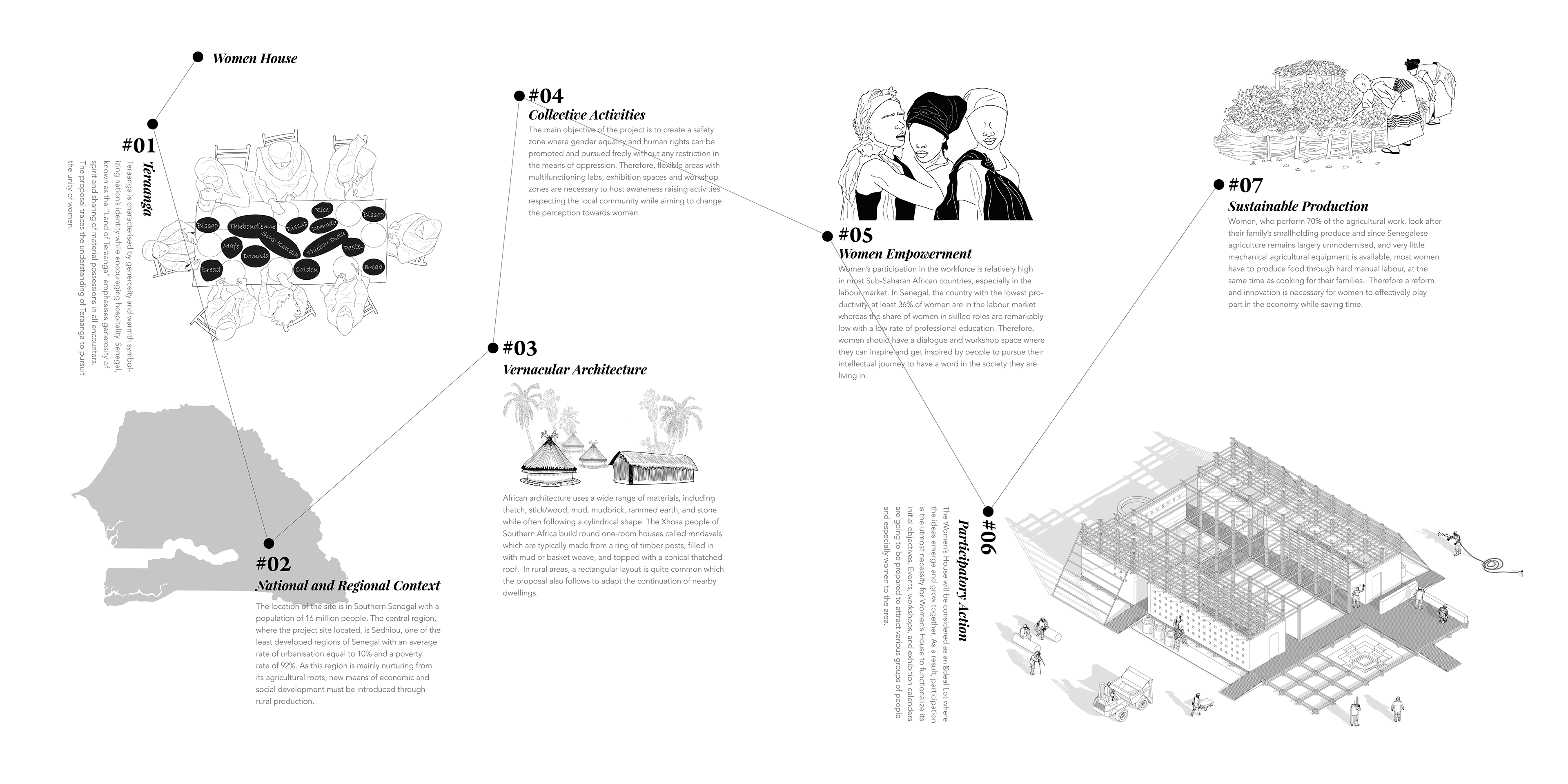
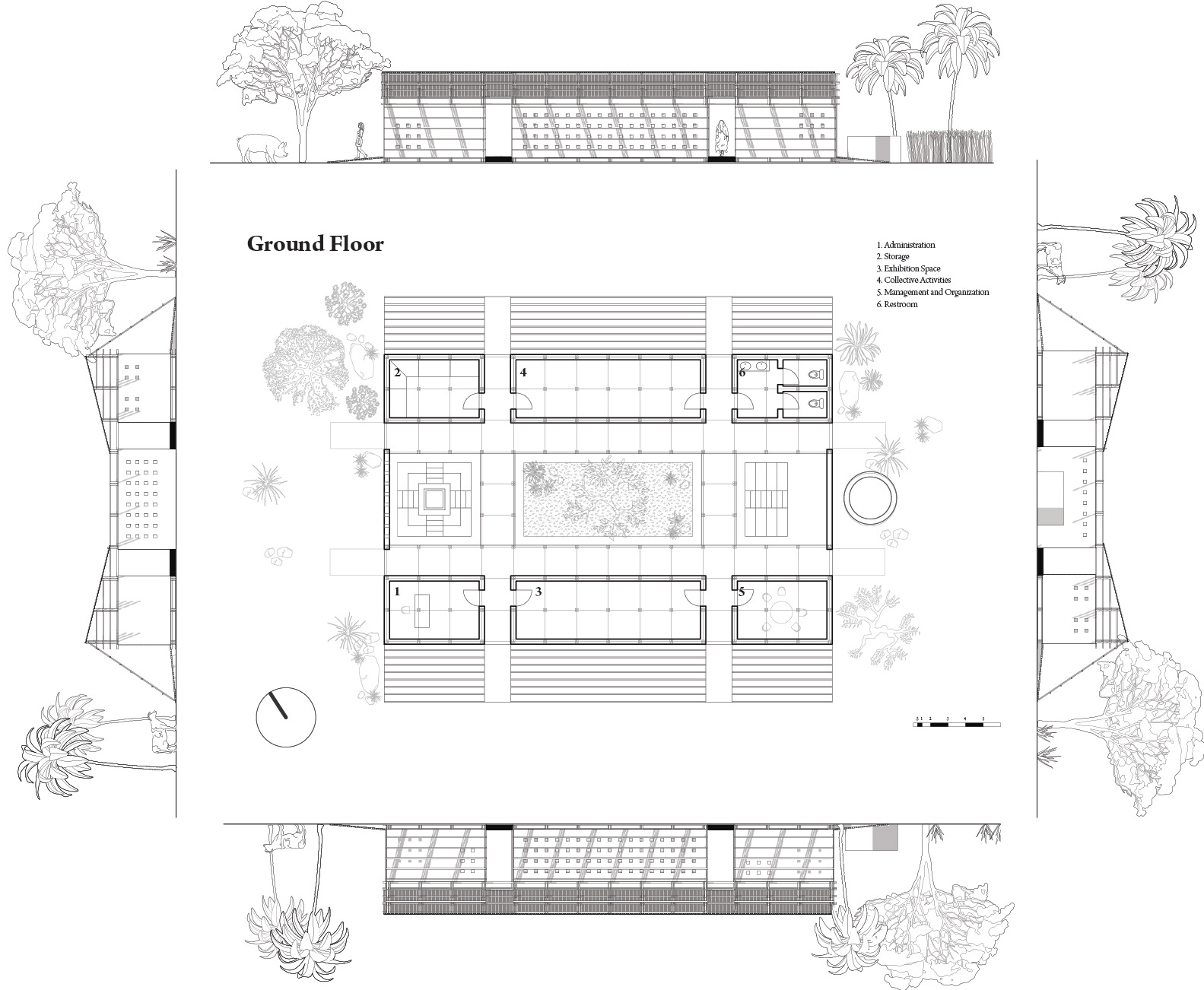
Image (Above): Women House plan and four elevations
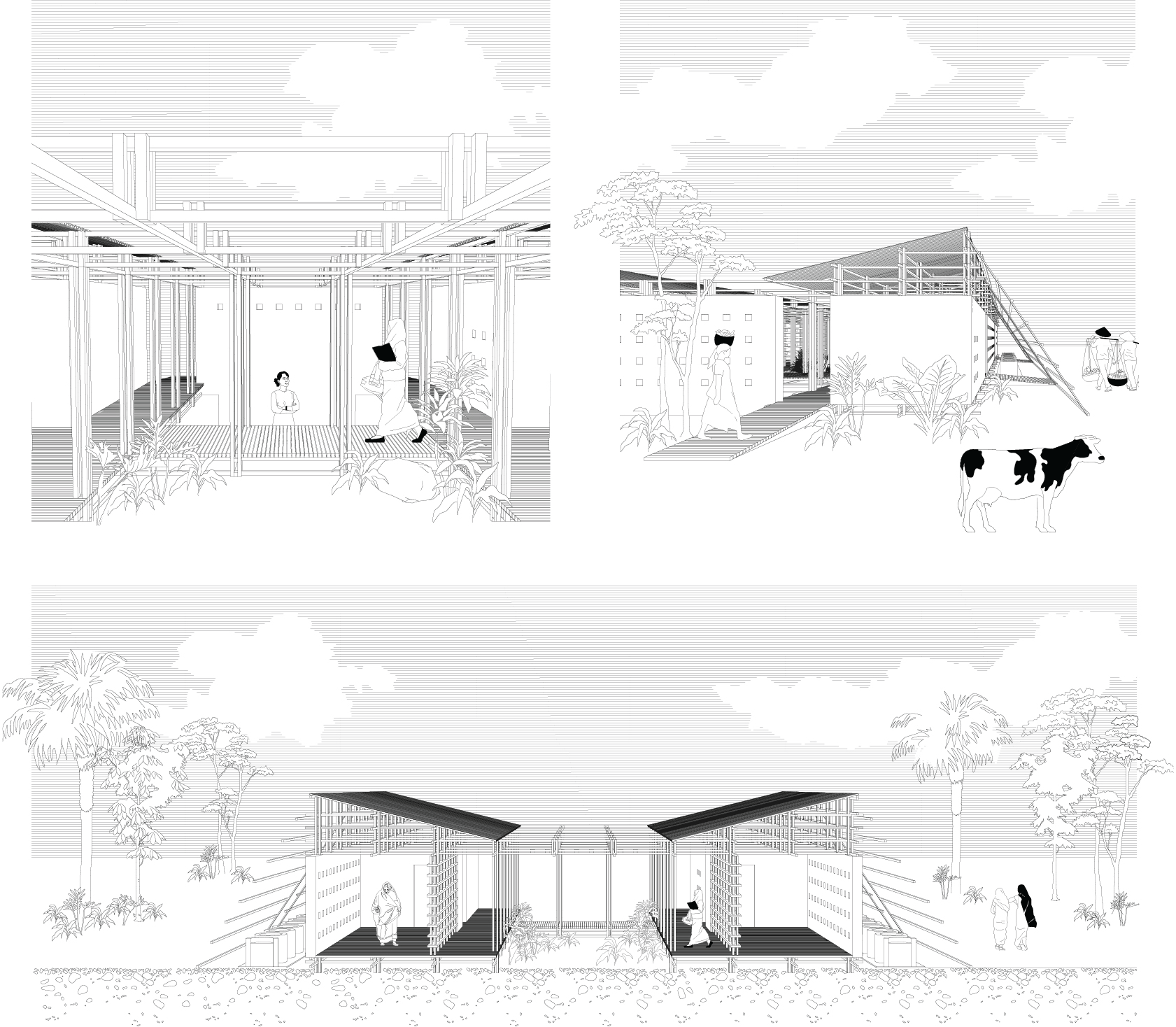
Image (Above): Women House perspectives and perspective section
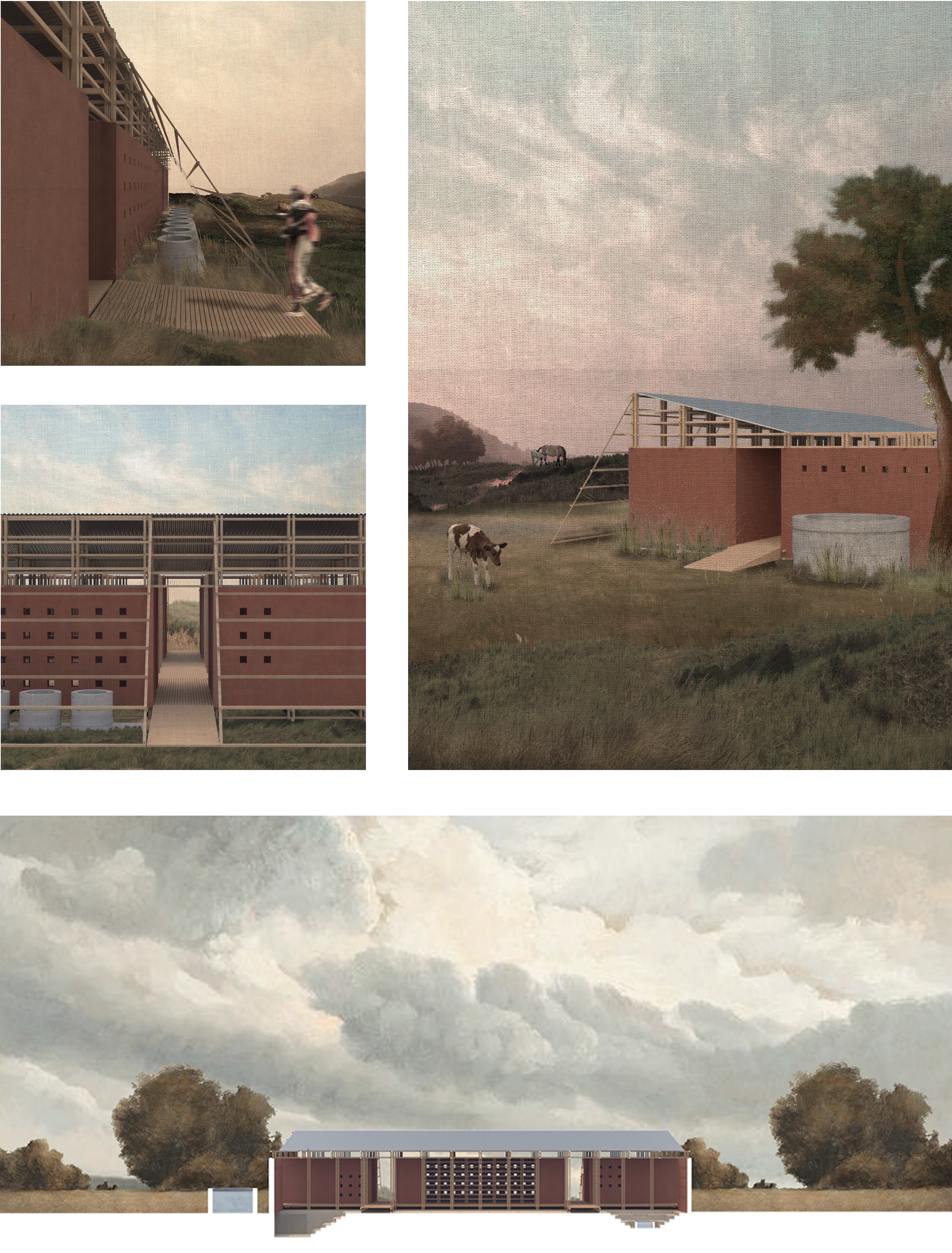
Image (Above): Perspective views from the Women House displaying the daily livelihood of the community
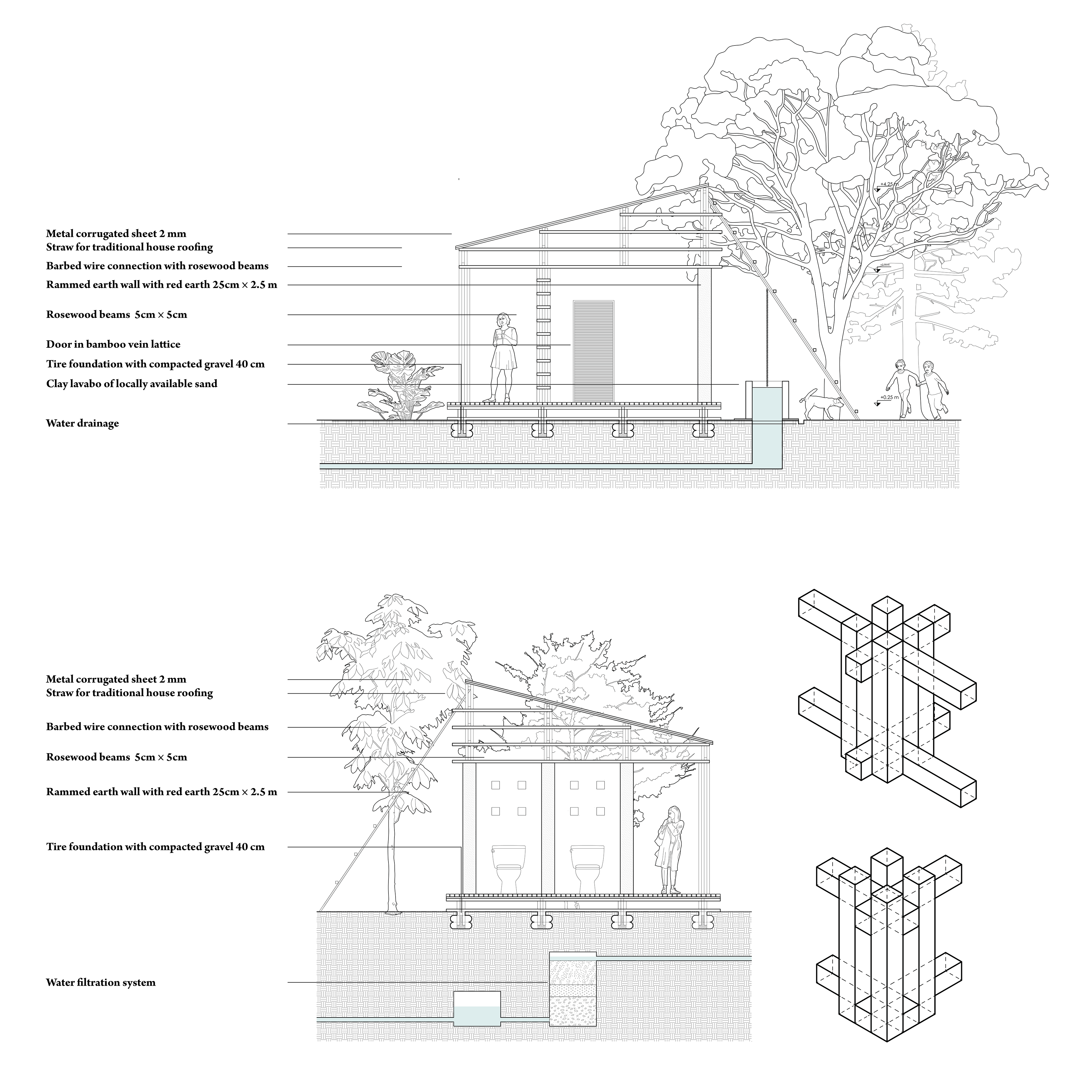
Image (Above): Technical detailing of the Women House demonstrating the strategy of water filtration, drainage, and storage